

It has been a heavy couple of weeks for our community here in Waukesha and Milwaukee counties. I’ve spent my days listening to neighbors, friends, and clients who are navigating the messy, exhausting aftermath of recent storms. When water enters your home, it feels like more than a maintenance issue—it feels like a violation. Your sanctuary has been compromised, and the emotional weight can feel just as heavy as the physical cleanup. While I often help families navigate their "next chapter" by selling their homes, my deeper commitment is helping you through the chapters in between. Right now, that transition is simply getting your house back together. As your neighbor and a fellow homeowner, I want to share some unfiltered truths and practical advice to help you find your footing and protect your home’s value.
Important Disclaimer: I am sharing information based on my experience as a neighbor and homeowner. This post is for informational purposes only and is not intended to be a substitute for professional legal, insurance, financial, structural, or safety advice. Always consult with your licensed insurance agent, a qualified contractor, and the manufacturer's safety guidelines.
Quick Action Checklist: Your First 48 Hours
- Document Everything: Take photos and videos of the water levels and damaged items before you throw anything away.
- Call Insurance Immediately: Confirm if you have a "Sump Pump Failure" or "Water Back-up" endorsement.
- Start the Demo: Pull up wet carpet and cut out damp drywall (usually 12-24 inches above the water line) to prevent mold.
- Dehumidify: Rent or buy high-powered fans and dehumidifiers to pull moisture out of the floor and studs.
CONTACT INSURANCE PROVIDER!
Call your provider right away. Many people are finding out they were underinsured for this level of damage. If you sustained NO DAMAGE, right now is a great time to call your insurance provider and review the level of coverage you have. Many providers will need to add an extra endorsement for lower-level coverage, AND it may not always cover water intrusion. Please ask specific questions of your insurance provider about how to get the most coverage for your home, especially if you have a finished lower level. It is important to understand HOW the water enters your home can be a determining factor in policy coverage. Know the details of your policy. Cheapest is not always the best.
The Harsh Reality of Insurance Gaps
One of the hardest lessons I see neighbors learning right now is that standard insurance policies are often not enough. Many people discover too late that they are underinsured for this level of damage. We strongly encourage you to review your policy. Water damage resulting from groundwater intrusion (water seeping through the foundation) often requires a specific endorsement. Contact your agent to understand exactly what your policy covers—and what it doesn't. In insurance, the cheapest premium is rarely the best value. If your home was spared this time, please take this as a sign to check your coverage before the next storm rolls in. As you begin the demo, remember that damp materials can quickly develop mold. If you see or smell anything "funky," don't wait. Reach out to professionals who offer transferable warranties—this is crucial for your home’s future resale value. Local Remediation Support: Ask your network for recommendations for remediation support, as there are definite go-to vendors in this space. We are happy to share who our clients are and we have had success with.WATER INTRUSION
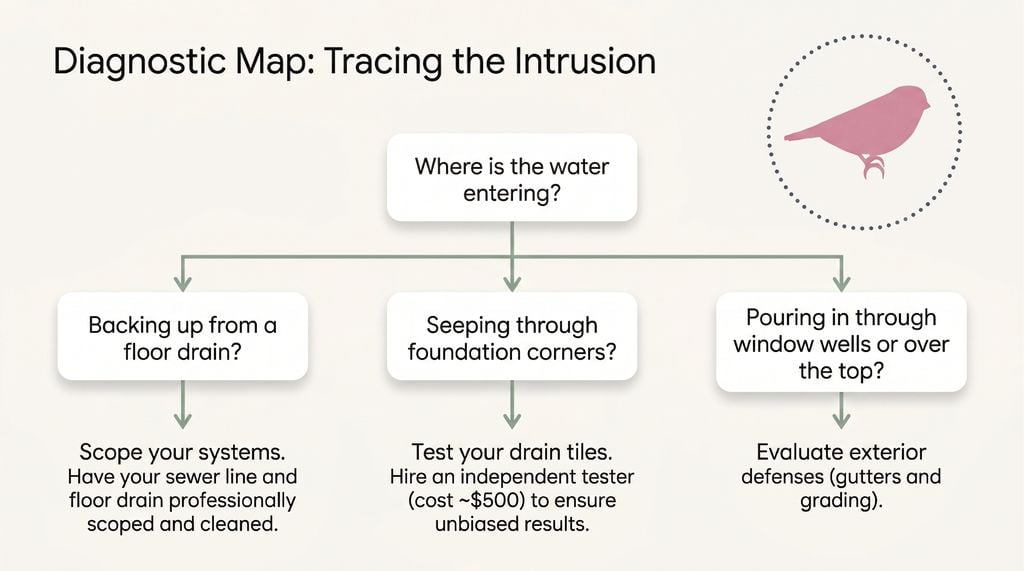 Try to assess HOW the water entered your home. Did it come up from your sump pump or floor drain? Seep in through the corners? Pour in through a window well? Is your concrete pitched correctly outside of your house? Before you patch your basement back together, now is a good time to assess if you may have a broken drain tile system. This is completed by a drain tile test to see if it is functioning properly. The cost is around $500. I recommend this be done by an independent contractor, not one affiliated with the foundation repair company.
THE DEMO
Remove that wet, funky carpet, trim, and drywall. It can turn into mold very quickly. The insurance adjuster should tell you what will be covered for replacement and just how far up the wall to cut the drywall. Can it be dried out, possibly? Is it going to smell in the future? Probably.
While the basement is exposed, you may consider having your sewer line and/or floor drain scoped and/or cleaned.
The Counter-Intuitive Rule for Drain Tile Testing
If you suspect your drainage system is failing, your first instinct is likely to call a foundation repair company. However, I often advise neighbors to take a different route first: hire an independent contractor to test your drain tiles.
A foundation repair company can have a vested interest in selling you a high-cost solution. An independent tester, however, charges a flat fee—usually around $500—to provide an unbiased review of what is happening underground. This small investment acts as a shield for your wallet, ensuring you only pay for repairs you actually need.
While the basement is exposed, I also recommend having your sewer lines scoped to rule out any other hidden culprits.
Local Independent Testing & Scoping:
Ask your network for recommendations for independent drain tile testers and sewer scoping services. Always verify licenses and read reviews before hiring. We’re happy to share experts that our clients or we have had success with.
GUTTERS
uring the next rain storm, grab an umbrella and walk around your house. Check to make sure your gutters are clear, put gutter extenders at least 10 feet away from your house (and try not to dump all of your water on your neighbor's house). Are your gutters leaking? Is water pouring over the top? Is there a tennis ball clogging one up (yep, this happened to us!) When was the last time you cleaned them?
GRADING
Is your grading appropriate? Ideally, the ground should slope down and away from the foundation at a rate of at least one inch per foot for the first 6-10 feet. And this means you actually pull the mulch back, add dirt, let it compress, add more dirt until you get the appropriate grade, and then put the mulch back. It is labor-intensive, and most homeowners just keep adding mulch instead of adding soil. If your concrete is pitching towards the house, maybe you need to have it mud jacked to get the correct pitch again. A large patio slab can dump a ton of water right at your foundation if it's pitched the wrong way.
DOWNSPOUTS
If you have buried downspouts, PLEASE TEST THEM! Yes, they look so nice and lovely going underground, but when was the last time you put a hose down there to see if it is clogged? Most homeowners forget about this step, and if those underground downspouts are clogged, all of that water is going to come back to your house. If you have edging around the beds of your house, extend the downspout PAST the edging onto your lawn. Don’t dump all that water coming off your house into your beds; it gets trapped.
SUMP PUMP
Check to make sure your sump is working properly. Next time it rains, go watch the pump to make sure it drains and that the check valve is functioning. Go outside and make sure that water is discharging at least 10-20 feet away from your house (but way longer is way better!). And if your sump pump line is buried, try to figure out where it discharges. Could it be clogged? If you get a battery backup, put the systems on concrete blocks, the watchdog system can get very hot and melt the plastic battery box if it is on top of it. Consider purchasing a separate submersible sump pump as a backup if your main sump can't handle the incoming water.A Proactive Fire Safety Tip
In the middle of a flood, your focus is entirely on water. However, high-stress situations can lead to secondary risks, specifically fire. If you use a battery backup system for your sump pump (like the "Watchdog" systems), be aware that they can become extremely hot when running continuously. If the plastic battery box sits directly on a flammable surface or even a cold floor, it can melt or ignite. Always refer to the manufacturer’s instructions for safe installation and placement. As a proactive measure, placing your unit on top of solid concrete blocks can help elevate it above potential water and provide a non-combustible barrier against heat buildup.
Rebuilding with Resiliency: The LVP Shift
If you are currently in the "demo" phase—tearing out water-logged carpet and drywall—I know it feels like a heartbreak. But as you look toward the rebuild, consider this an opportunity to "future-proof" your basement. Many of my clients are moving away from basement carpeting in favor of Luxury Vinyl Plank (LVP). LVP is beautiful, but more importantly, it is resilient. If water ever finds its way back in, LVP is significantly easier to clean, dry, and salvage than carpet.
The Dry Nest
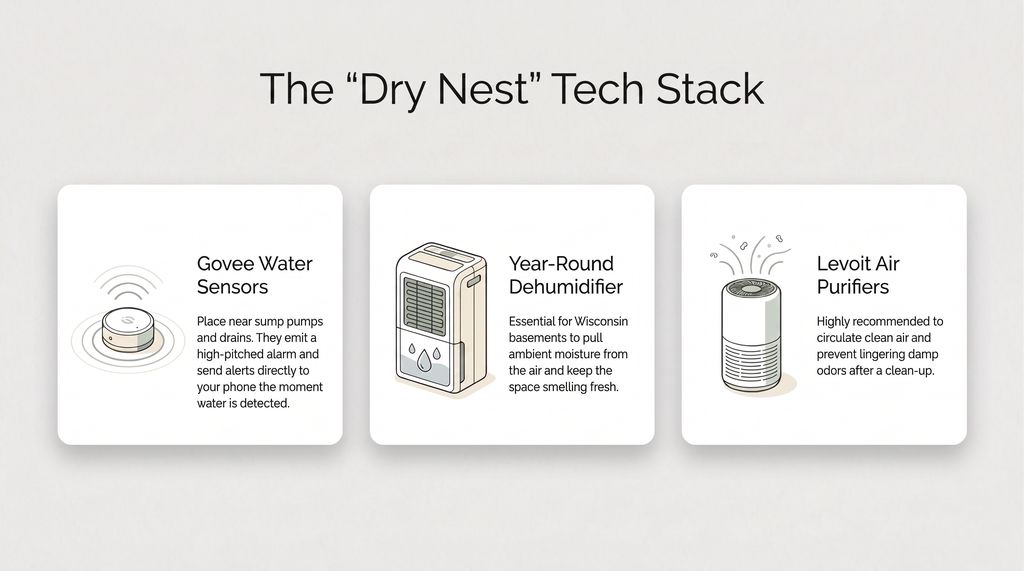
To add a final layer of peace of mind, I recommend these tech additions:
- Govee Water Sensors: We use these water sensors in our home. They will alert your phone if water is detected and send out a high-pitched sound to let you know water is in the house.
- Govee Dehumidifier with pump: Run a dehumidifier year-round to keep the musty smell at bay.
- Levoit Air Purifiers: These help manage air quality and that lingering "basement smell" after a damp event.



Foundation Repair Resources: Qualified Professionals
For foundation repair, consult with licensed, qualified professionals who adhere to WAFRP standards. We’re happy to share experts that our clients or we have had success with.
The Power of Community and Next Steps
This approach—balancing technical real estate expertise with a neighborly hand—is what we call "The Nested Way." We believe that being a good advisor means being a part of the village first. As we all work to dry out and move forward, I want to hear from you. Do you have a local vendor who saved the day? A tip for managing moisture that we didn't mention here? Please share your recommendations in the comments so we can all learn together. I’m sending so much love, light, and positive vibes to everyone currently in the cleanup phase. If you need a recommendation or just a bit of guidance on how this affects your home's value, I am always happy to be of service. It truly takes a village.
Check out this article next